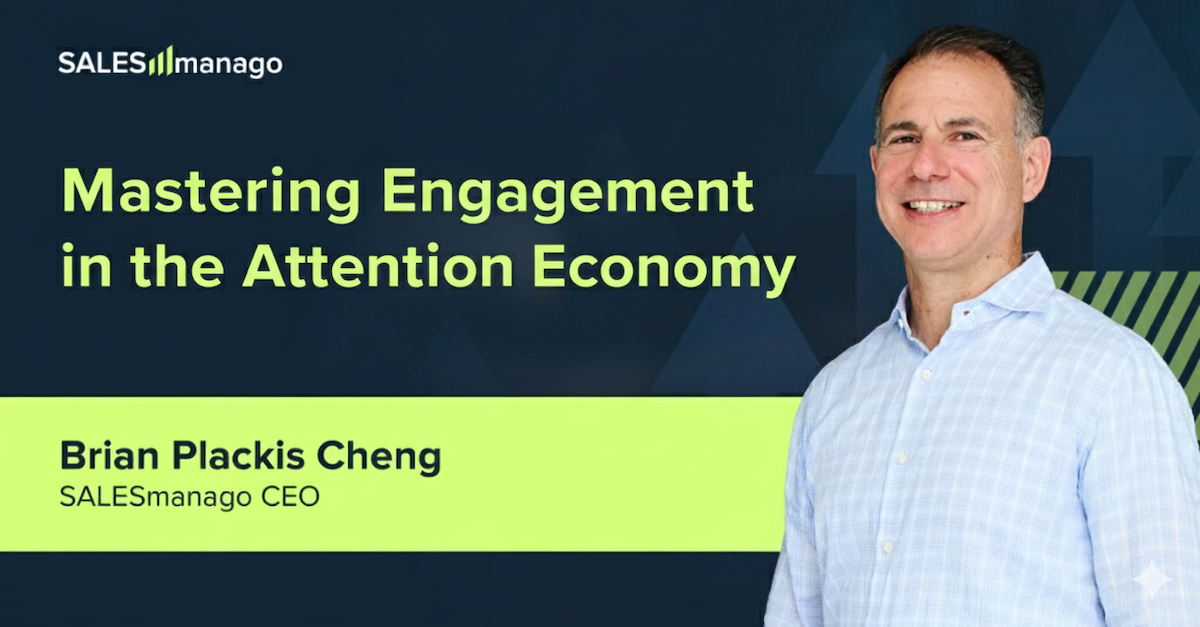
Mastering Engagement in the Attention Economy


Global Scale Masterclass: The Cross-Border Expansion Playbook
At our core, we all want to be seen, heard, and understood. We seek interactions with brands that truly know us, 'get' us, and understand our aspirations. This fundamental human need extends directly to how we engage with businesses. We crave relevance, value, and connection.
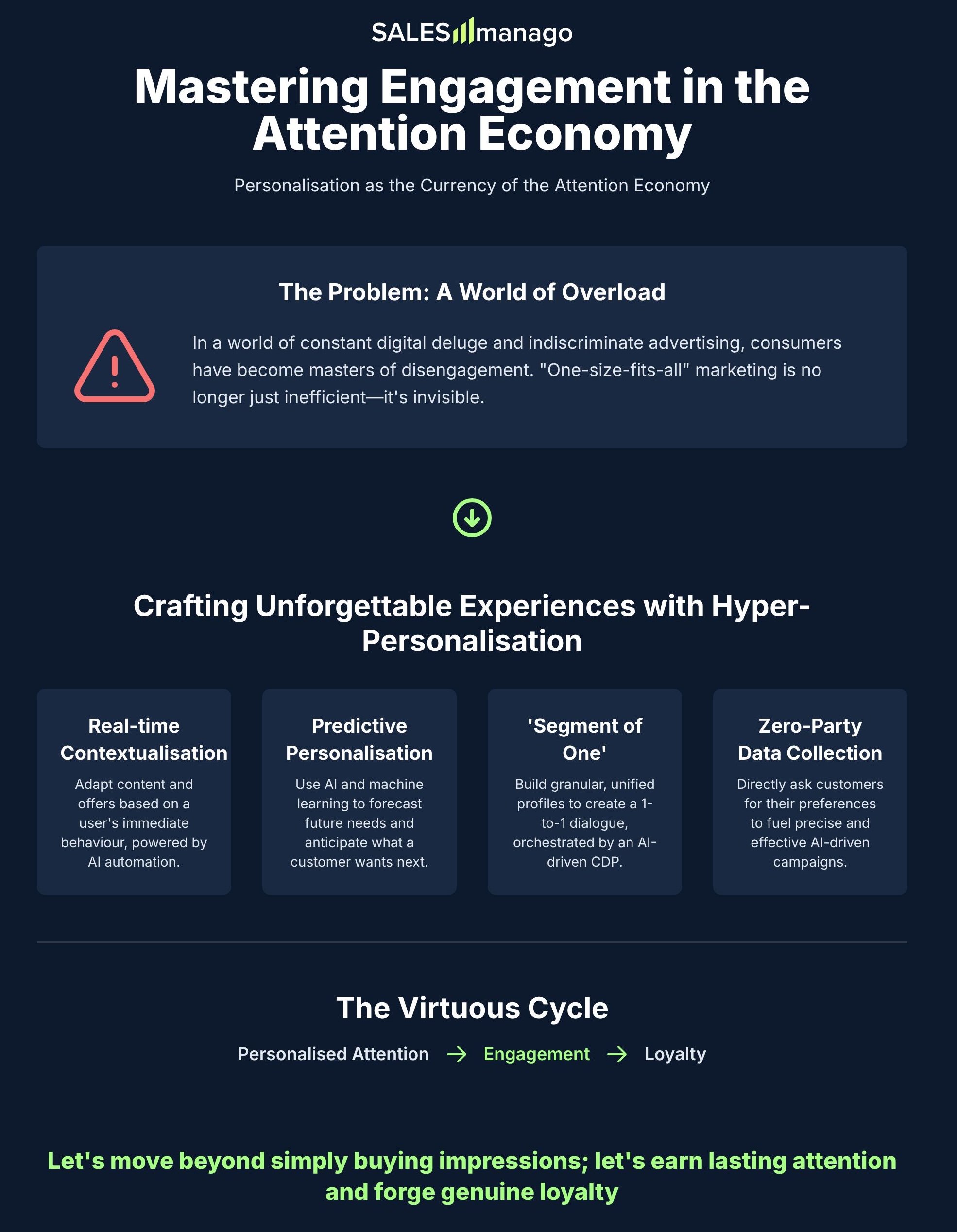
However, the digital world is saturated with generic content. Brands, despite significant budgets, frequently broadcast mass messages, hoping to appeal to everyone and often appealing to no one. If a message isn't tailored to a customer's specific needs and identity, it will be overlooked. True engagement and lasting loyalty are built when a brand shows it truly understands each individual – a feat now achievable at scale through AI-driven marketing automation.

To grasp how to effectively capture attention, consider TikTok's phenomenal growth. It’s a prime example of earning attention through hyper-personalisation. Its success lies in sophisticated algorithms that meticulously curate each user's feed, transforming it into a uniquely tailored stream of content. Every interaction refines the algorithm's understanding, ensuring the next piece is even more relevant. This deeply personalised experience drives engagement, creating an addictive loop that commands unwavering attention. Users feel TikTok 'gets' them, and that feeling is the ultimate currency.
The strategic lesson is profound: generic, untargeted experiences quickly lose customer attention and revenue. eCommerce brands must adopt a similar data-driven mindset, moving beyond basic segmentation to individual understanding that mirrors algorithmic precision. Leveraging first-party and zero-party data – purchase history, browsing, stated preferences – to curate and personalise the entire customer journey is critical. This level of continuous, adaptive personalisation is only feasible with robust AI-driven marketing automation.
This isn't just about tweaking recommendations; it's about reshaping the customer experience. When customers feel seen and catered to, they stop scrolling and start engaging. This strategic shift from broad-stroke advertising to nuanced, personalised engagement is a vital business imperative for sustained growth and true competitive differentiation.
The challenge for leaders is clear: it’s no longer about simply increasing ad spend. It’s about redefining how we engage.
This brings us to a crucial, self-reinforcing cycle: personalised attention fuels engagement, which in turn builds loyalty. When customers receive tailored communication, relevant recommendations, or experience an intuitively understanding website, they feel valued. This recognition fosters engagement – they spend more time with your brand, open your emails, and click your offers. This deeper engagement, built on trust and relevance, naturally blossoms into lasting loyalty, turning occasional shoppers into dedicated advocates.
Achieving deep, individualised engagement at scale requires a multi-faceted approach, deploying a strategic playbook of methods:
Real-time contextualisation: Adapting content and offers based on a user's immediate behaviour and current context. If browsing hiking gear, dynamic banners instantly reflect related products or guides. AI systems automate the delivery of perfectly timed content.
Predictive personalisation: AI and machine learning analyse vast datasets to forecast future needs and preferences, anticipating what a customer might want next. Think of streaming service suggestions or proactive eCommerce recommendations. Such foresight is the direct result of advanced AI algorithms, automating intelligence.
'Segment of One': The goal is a one-to-one dialogue by building a granular, unified profile for each customer, encompassing all known data. This focuses on individual relevancy, ensuring messages feel handcrafted. Advanced Customer Data Platforms (CDPs) orchestrate and execute this with AI-driven automation (Read more about this in my article: Your Next Big Competitor is the “Segment of One.)
Zero-party data collection: Directly asking customers about their preferences through quizzes or preference centres. This explicit data provides a direct line to individual needs, fueling all other personalisation efforts and making campaigns even more precise and effective.
By combining these methods, brands build a comprehensive strategy for hyper-personalisation. This allows them to move beyond surface-level interactions and create genuinely relevant experiences that capture and retain precious customer attention, all powered by intelligent marketing automation systems that learn and adapt.
For all of us in leadership: are we truly equipping our teams to thrive in this new reality? Are we simply directing them to increase ad spend, or are we empowering them to create truly personalised engagement, driven by intelligent automation?
The key differentiator in today's competitive market is no longer solely about product quality or price – it’s about the quality of the attention your brand commands. In the attention economy, the ability to make consumers feel heard and to deliver exactly what they need, precisely when they need it, will differentiate our organisations. It’s a strategic imperative that demands a shift in mindset, investment, and the AI-powered technology we champion to automate and scale this personal touch. Let's move beyond simply buying impressions; let's earn lasting attention and forge genuine loyalty.


Eighteen billion dollars. That's how much revenue eCommerce stores lose to abandoned carts annually. Not "potential revenue if everything went perfectly." Actual money left on the table because nobody followed up.Marketing automation recovers that revenue whil...

Your eCommerce store shows the same homepage to everyone. A first-time visitor sees the identical hero banner as a returning customer who's bought three times this month. Someone browsing on mobile during lunch gets the same product grid as a person shopping from a laptop at midnight.You're leaving money on the table.
I've spent a lot of time over the past few years in conversations about AI. With boards, with investors, with commercial teams. The question is almost always the same: “When are we going to have AI doing this for us?”My answer is always the same too: sooner than you think, but not in the way you’re imagining.