#Growth Hack Series: Your Antidote to Choice Paralysis: AI Recommendations in Fashion eCommerce


Global Scale Masterclass: The Cross-Border Expansion Playbook
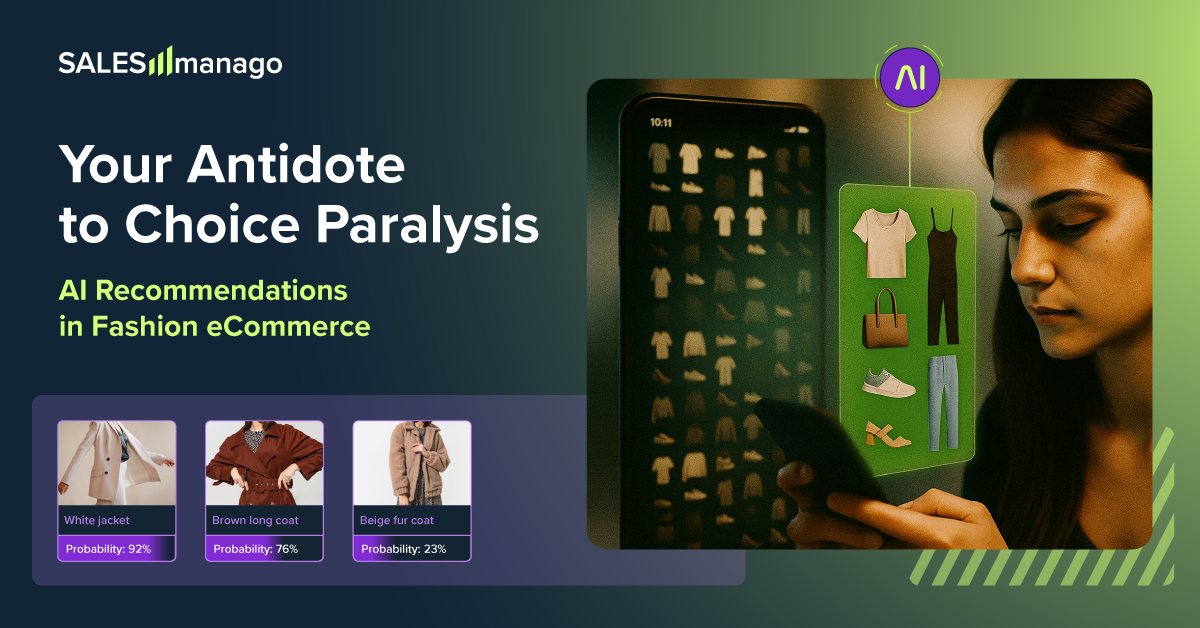
Ever find yourself scrolling through an online shop, past hundreds of perfectly nice things, only to close the tab feeling utterly exhausted and having bought precisely nothing? You’re not alone. It’s a modern muddle the industry calls “choice paralysis,” and it’s turning the dream of the endless aisle into a bit of a nightmare. The key to fixing this and creating a genuinely splendid customer journey lies in a smarter approach—one powered by AI in fashion eCommerce.
The latest The State of Fashion 2025 report from McKinsey lays it all out in stark numbers. A staggering 74% of shoppers have abandoned a purchase simply because they were overwhelmed. This isn’t just a fleeting frustration; it’s a direct hit to your bottom line and a major blow to customer engagement. It seems the old-fashioned search bar just isn’t cutting the mustard anymore.
Now, here's the good news. The people in charge are catching on. McKinsey finds that half of all fashion executives see product discovery as the single best use for AI this year. Customers are nodding right along, with 82% wishing for AI help to cut down their research time—a phenomenon that reflects the classic 'paradox of choice' and is reinforced by modern industry data, with reports from Salesforce confirming that the vast majority of consumers now expect predictive, personalized shopping experiences. The industry has reached a tipping point, moving away from simply showing more towards showing smarter.
So, what’s a savvy retailer to do? The McKinsey report doesn’t just point out the problem; it offers a frightfully straightforward roadmap. It all boils down to three rather sensible steps.
Don't Reinvent the Wheel—Find a Good Partner: The report advises building a flexible "technology backbone" and finding the right tech partners. Honestly, trying to build a sophisticated AI system from scratch is a bit like trying to build your own car; it’s far cleverer to partner with a specialist. A platform like SALESmanago acts as that robust, AI-powered engine, ready to be dropped into your existing setup.
Good Data In, Good Recommendations Out: AI is only as brilliant as the data you feed it. Your product data needs to be rich and well-structured for the magic to happen. SALESmanago thrives on this—it takes your detailed product, transactional, and behavioural data and uses it to fuel recommendations that are not just personalised, but uncannily relevant.
Give Your Team Superpowers: A tool is only as good as the person using it. The report rightly notes the need to upskill your team. This isn’t about replacing people; it’s about turning your talented marketers into AI-savvy growth hackers. A good platform partner helps with that, providing the support to make your team truly effective.
When you get this foundation right, the results are a proper treat. We’re talking about moving beyond clunky filters to offer genuinely hyper-personalisation. It’s about creating a truly personal experience—one that anticipates what your customer wants and delivers it with flair. It means clever, timely nudges like price drop alerts, back-in-stock notifications, and automated reminders that recover those abandoned carts from the 74% of shoppers who got lost in the noise.
At the heart of it all lies a simple truth: The future of fashion eCommerce is about intelligent curation, not overwhelming choice. By following the operational advice in the McKinsey report and leveraging a powerful, user-friendly platform, you can solve the pressing challenge of choice paralysis. You can start building a more engaging, satisfying, and ultimately more profitable journey for your customers. Getting started with AI Recommendations in fashion eCommerce isn't just a good idea; it's the most sensible thing you could do.


Eighteen billion dollars. That's how much revenue eCommerce stores lose to abandoned carts annually. Not "potential revenue if everything went perfectly." Actual money left on the table because nobody followed up.Marketing automation recovers that revenue whil...
Your eCommerce store shows the same homepage to everyone. A first-time visitor sees the identical hero banner as a returning customer who's bought three times this month. Someone browsing on mobile during lunch gets the same product grid as a person shopping from a laptop at midnight.You're leaving money on the table.
I've spent a lot of time over the past few years in conversations about AI. With boards, with investors, with commercial teams. The question is almost always the same: “When are we going to have AI doing this for us?”My answer is always the same too: sooner than you think, but not in the way you’re imagining.